

This system map uses the Fiscal Hydraulics lens to examine reconstruction in Gaza. The analysis draws on the Gaza Strip Rapid Damage and Needs Assessment and shows that the reconstruction context is constrained by a huge debris and explosive ordnance burden, financial system disruption, and the need to restore critical civil administrative functions. These are prerequisites that determine whether capital can move at all to support people in need.
Even if the broader context allowed, reconstruction projects cannot proceed at scale until debris is cleared and land is made safe, financial channels are in place to receive and direct funding, and administrative systems have the capacity to absorb and implement it. Delays in restoring these enabling systems delay housing, basic services, and the wider recovery people depend on.
That makes Gaza materially different from Ukraine, which I analysed previously through the same system lens. The framework is the same, but the location of the bottleneck is different. In Gaza, the binding constraints are these enabling conditions.
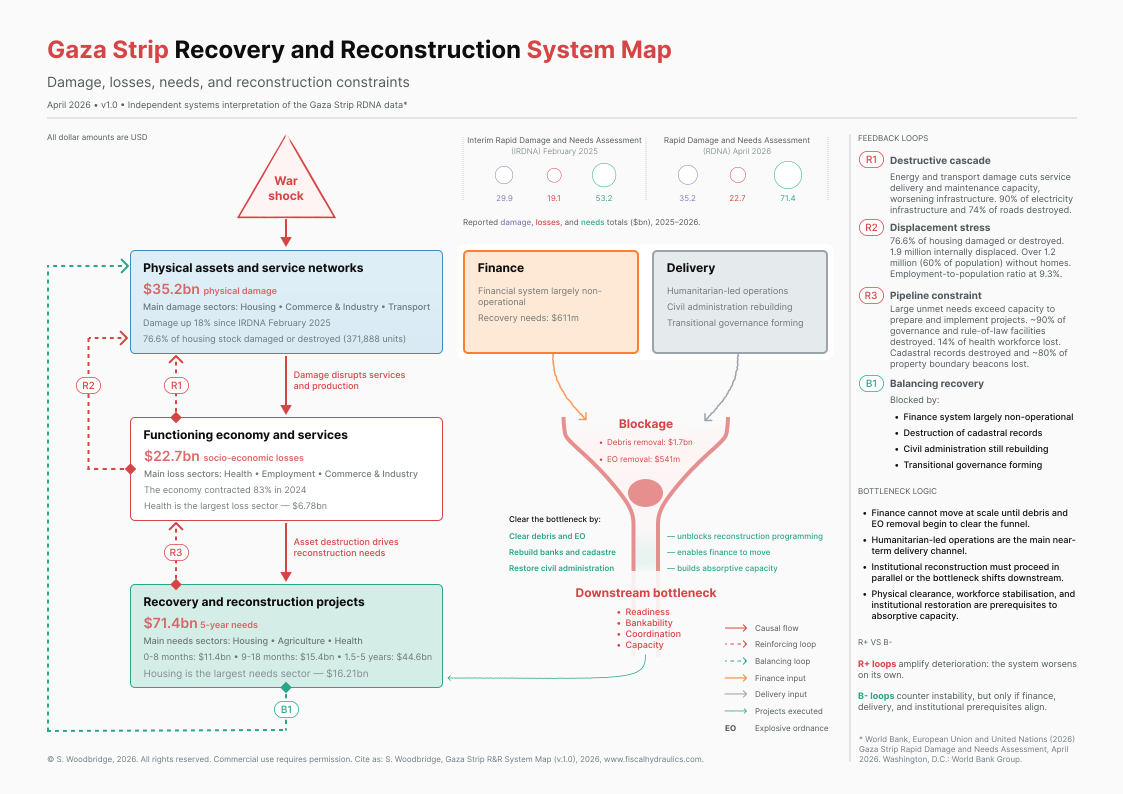
Debris removal and ordnance clearance are knowable tasks, even if they are complex, dangerous, and time-consuming. This work can be led by humanitarian actors, which means it can begin before Gaza’s financial and administrative capacity are fully restored.
The harder task is rebuilding that capacity. One critical issue is the loss of cadastral records, which are central to rebuilding. Where those administrative and legal foundations are damaged, disputed, or absent, project preparation, land access, and reconstruction sequencing become harder to verify and manage.
More broadly, available finance is not useful if the system cannot channel it to prepared, implementable projects and services for people in need. Administrative and financial system restoration therefore has to proceed in parallel with clearance. Otherwise the bottleneck shifts downstream and the needs in Gaza take longer to address.