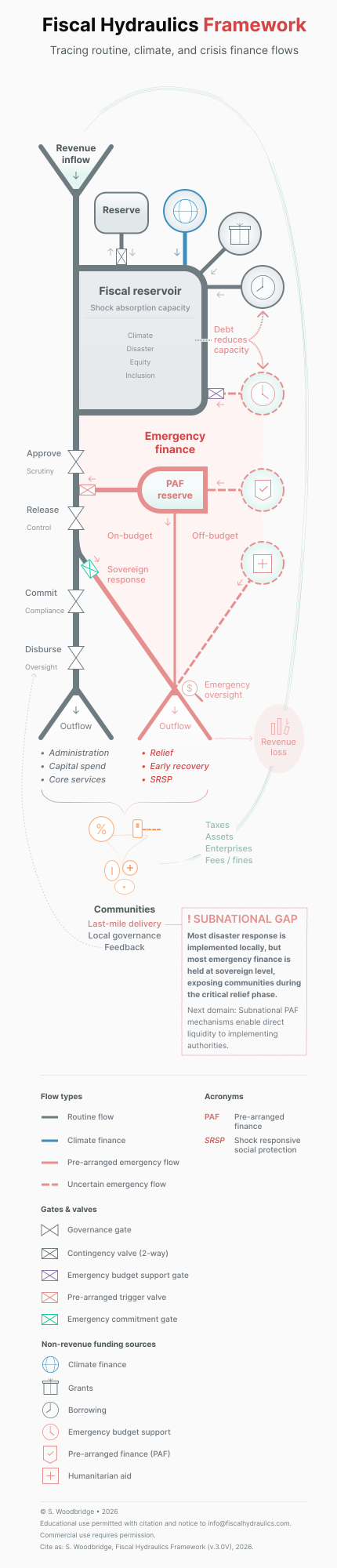
What happens when a major climate shock strikes?
Adjust the parameters below to explore when delays in approvals, releases, disbursement, and local execution become the main constraint on crisis response. All financing stocks are shown in relative model units, scaled to a baseline fiscal reservoir of 100.
share of fixed response envelope reaching communities within the crisis response window
share of fixed response envelope reaching communities after the crisis response window
share of fixed response envelope lost during the crisis response window
When delivery systems are slow, additional funding does not automatically translate into faster support for people in need.
Pre-arrangement can improve speed. Gate reform can improve access. Subnational capacity can improve reach.
This is an illustrative model designed to explore when delivery constraints, rather than funding volume, become the main limit on crisis response. It is not a formal assessment of any specific country. All financing stocks are shown in relative model units, scaled to a baseline fiscal reservoir of 100. The simplified version focuses on crisis-response delivery channels and fixed response-envelope accounting. Core indicators are reported against the crisis response window.